หน้าเว็บ

แสดงบทความที่มีป้ายกำกับ man u แสดงบทความทั้งหมด

วันพุธที่ 22 มิถุนายน พ.ศ. 2554

The most successful manager “Sir Alex Ferguson”


Birthplace: Govan, Glasgow
Previous Clubs: East Stirling, St Mirren, Aberdeen
Honours: English Premier League:2011, 2009, 2008, 2007, 2003, 2001, 2000, 1999, 1997, 1996, 1994, 1993; FA Cup: 2004, 1999, 1996, 1994, 1990; League Cup : 2010, 2009, 2006, 1992; FA Charity Shield: 1997, 1996, 1994, 1993, 1990, 2003; Scottish Premier League: 1985, 1984, 1980; Scottish First Division: 1977; Scottish FA Cup: 1986, 1984, 1983, 1982; Scottish League Cup: 1986; UEFA Champions League: 2008, 1999; UEFA Cup Winners' Cup: 1991, 1983; European Super Cup: 1991, 1983; Inter-Continental Club Cup: 1999


Like so many of football's top managers, Alexander Chapman Ferguson emerged from humble beginnings. Born in Govan, the shipbuilding district of Glasgow, his working-class roots played a role in his ascent to become the most successive manager in Premier League history and, after an incredible two decades in charge of Manchester United, he has won the respect of everyone in the game.
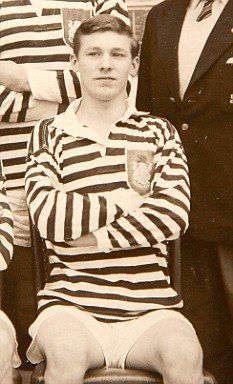


Sir Alex Ferguson: United boss

Ferguson took the plunge into management with East Stirling in July 1974 then moved to First Division side St Mirren in October of the same year. He promptly guided the Paisley club to the championship in 1976-77 and, despite doing so on limited resources, Ferguson was sacked three years into his tenure after a disagreement with the club's chairman.

Fergie eventually signed for the Aberdeen in August 1978 and transformed an average side into the form team of the 1980s, breaking The Old Firm (Rangers and Celtic) stranglehold on Scottish football, and led the Granite City club to three league titles, four Scottish Cups and a League Cup in eight seasons. His greatest achievement , though, came in 1983 when he led Aberdeen to a 2-1 victory over the mighty Real Madrid in the European Cup Winners' Cup.

He rejected lucrative offers from Barcelona, Arsenal, Rangers and Tottenham to take control of Manchester United on in November 1986 and initially appeared to have left his success in Scotland. However, Ferguson was rebuilding the club in minute detail and revamped the youth system and stamped out the drinking culture at Old Trafford by shipping out many of the crowd's favourites.


Yet Fergie's job was on the line as United went into a Third Round FA Cup tie against Nottingham Forest having lost six and drawn two in eight games - and he was only saved by a narrow 1-0 win. That victory marked a turning point in fortunes for Ferguson and the club won the FA Cup in 1990, then the European Cup Winners' Cup a year later.

In the new 'Premier League' Ferguson found more success. The arrival of enigmatic Frenchman Eric Cantona proved to be the final piece of the jigsaw and United finally won the league title, ending a 26-year drought. Then the 1993-94 season saw United stamp their authority on English football as Ferguson claimed his first Double - beating Blackburn Rovers to the League Championship and crushing Chelsea 4-0 in the FA Cup final.

Another Double came two years later and with 'Fergie's Fledglings' - David Beckham, the Neville Brothers, Paul Scholes, Nicky Butt and Ryan Giggs - in full flight, they went one better in 1998-99 by claiming an historic Treble with a 2-1 win over Bayern Munich in the Champions League. The manager was subsequently knighted - becoming Sir Alex Ferguson - in the Queen's birthday honours list as a reward for his services to British football.

The 2000-01 season saw United cruise to another title, this time wrapping it up in mid-April, as Ferguson became the first manager to win three English League titles in a row to become the most successful manager in the history of English football. But Arsenal, and then Chelsea continued to challenge United's dominance.


Picking up just one title (2003) in four years, Ferguson rebuilt his side with the purchases of Cristiano Ronaldo and Wayne Rooney and by 2007 he was back at football's top table again.


Having built his third team at Old Trafford, United won three back-to-back titles from 2007-2009 and also claimed another Champions League title - beating Chelsea on penalties in Moscow in 2008. Having equalled Liverpool's record haul, he overtook it in 2011 and ensured that his place in football's record books is written in stone.

Strengths: A hard taskmaster, Ferguson gets 100% out of his players and commands ultimate respect. His experience is second to none and he knows every trick in the book in terms of psychological games.

Weaknesses: Quick to blame others for his sides' defeats and criticise match officials, perhaps his arrogance is his biggest downfall.


Career high: Winning the treble in 1999, with a stunning fightback in Barcelona's Champions League final against Bayern Munich.

Career low: November and December of 1989, when Manchester United lost six and drew two in eight games. One more defeat and it was widely predicted that he would be sacked. Ferguson called this his 'darkest period'.

Tactics: With such a long time at the helm behind him, Ferguson has seen it all. He loves his players to be passionate and work hard around the pitch, while a quick counter-attacking game is usually at the heart of any gameplan that he has worked out.


Quotes: ''You'll win nothing with kids.'' Alan Hansen, on the United side that became one of the most successful teams in history.

Trivia: Ferguson's house in Wilmslow is named Fairfields after the shipyard at which his parents worked.


Reference


วันพุธที่ 15 มิถุนายน พ.ศ. 2554

The best goalkeeper forever "Peter Schmeichel"


Peter Schmeichel


Affectionately known as the ‘Great Dane’, Peter Schmeichel is so popular in England that even opposition fans admit to a soft spot for him. This is in large part due to the respect the Denmark native commands, with a long and glorious career playing in clubs around Europe and winning cups, solidifying his reputation as one of the greatest goalkeepers in the history of the sport.

In England though, Schmeichel is best known as the keystone of a Manchester United squad that topped the league again and again in the 1990s. Schmeichel is considered by many pundits to be one of the finest foreign players in the English league, and was certainly the most remarkable goalkeeper of his generation, with his great height, white-blond hair and occasionally red nose(!) ensuring he soon became a recognisable figure both on and off the pitch. His personal accolades attest to his individual prestige, even picking up consecutive titles for World and European Goalkeeper of the Year in 1992 and 1993.

Youth
Peter Boles?aw Schmeichel was born on the 18th of November 1953 in Denmark, to a Polish father and a Danish mother. As a child he played amateur football for local boys’ teams, making his international professional debut in 1984 for the Danish national team’s under 21-s. He started his club career at Hvivdovre IF. The club fared badly despite the protection afforded them by Schmeichel’s excellent defence, and was relegated in 1985. Soon after, Schmeichel moved to another Danish club, Brøndby, where his international career truly began.


Early career
Playing for Brøndby, Schmeichel won four championships in five years. The pinnacle of his career there was the team getting to the UEFA Cup semi-finals in 1991. This was what really got him noticed not only by football fans but also a certain Alex Ferguson, who bought him for Manchester United that same year. Schmeichel was purchased for little over half a million pounds, a bargain for one of the players who would go on to become one of the team’s all-time greats.

The following year would also prove to be his most successful period in the international game. As the mainstay of the Danish national side, he was central to the country's incredible triumph in the 1992 European Championships - most notably, when he saved a penalty from Holland's Marco Van Basten in the semi-final. Schmeichel's contribution was firmly acknowledged when he was voted Best Goalkeeper of the Year 1992.


Manchester United
The success kept coming in club football as well, with Schmeichel spending the greater part his career with United, becoming a much-loved figure amongst fans. During his eight years at Manchester United, Schmeichel was the stalwart of the team, rarely substituted and eventually made captain, and he reached the top of the Premier League no fewer than five times alongside his teammates. United also won three FA Cups and the UEFA Champions League.


There were few lows in this most successful of partnerships, although Schmeichel did fall out with Alex Ferguson and left the club briefly during the 1993-4 season. Ferguson reputedly forgave Schmeichel’s outburst when he heard him giving a humble apology to his team-mates in the changing rooms. More seriously though, Schmeichel was accused by Ian Wright of racism in 1997, a charge which was investigated but eventually dropped in the same year.

Schmeichel’s last season for United was perhaps his career high, as the 1998-1999 season saw the team capture the treble of the Premiership, the FA Cup and the UEFA Champions League. As well as being an integral member of the team, he was even captain during the Champions League final in the place of the suspended Roy Keane, lifting the trophy after a dramatic 2-1 victory in Barcelona. It was truly a perfect way to round off his career at United.

After United
By now 35 years old, the gruelling English seasons had taken their toll and Schmeichel decided to make a change, signing with Portuguese club Sporting CP. He went on to win the Portuguese Premier league with them, but did not stay for long, moving again in 2001.

Instead, he remarkably returned to England where he signed for Aston Villa. That season, he befittingly became the first goalkeeper to score a goal in the Premiership, against Everton.


Manchester - Again!
His brief sojourn in Portugal over, Schmeichel remarkably returned to England with Aston Villa. However, the shock was still to come as, after one season in the Midlands, he signed with United's historic rivals, Manchester City. During what would prove his final season, he managed to keep a clean sheet in the Manchester derby and contributed to a famous victory for City. Despite such moments, Schmeichel finally called time on his career at the end of that 2002-2003 season.


Retirement


As well as being one of the many retired sports players who can constantly be found on television quiz shows, Schmeichel has worked as a football pundit for the BBC since his retirement from the game. He also, famously, put in an endearingly bad performance on the dance show, ‘Strictly Come Dancing’, finally being voted off by the public on his 43rd birthday.

On a more serious note, Schmeichel has enthusiastically taken part in ‘Soccer Aid’, and invested his money in ailing Danish football clubs. In 1999 he brought his childhood club Hvidovre, and in 2007 he even attempted a bid for his old club Brøndby, which was rejected.

The Schmeichel family also continue to take part in football through Peter’s son, Kasper, who plays - surprise surprise - as goalkeeper for, ironically enough, Manchester United’s arch-rivals Manchester City. Schmeichel Sr, meanwhile, currently lives with his wife in Denmark, where he presents…a television quiz show.


Kasper Schmeichel and his dad Peter
 

Teams
Youth teams

•Ledøje-Smørum - 1970 - 1971
•Gladsaxe/Hero 1971 - 1981
Senior teams

•Gladsaxe/Hero 1981 - 1083 (46 App)
•Hvidovre IF 1984 - 1986 (76 App, 6 Goals)
•Brøndby IF 1987 - 1991 (119 App, 2 Goals)
•Manchester United 1991 - 1999 (296 App, 1 Goal)
•Sporting CP 1999 - 2001 (50 App)
•Aston Villa 2001 - 2002 (29 App, 1 Goal)
•Manchester City 2002 - 2003 (29 App)
•Denmark 1987 - 2001 (128 Caps, 1 Goal)
They say
‘He extends and grows even bigger than he is’ - Ron Atkinson

‘There is one place in the team that is automatic. It is the one that belongs to Schmeichel’ - Bobby Charlton (on his Manchester United ‘dream team’)

Individual Honours
•Inducted into English Football Hall of Fame: 2003
•Danish Player of the Year: 1999, 1993, 1990
•UEFA Club Football Awards: 1998
•Best European Goalkeeper: 1993, 1992
•World’s Best Goalkeeper: 1993, 1992
•Brøndby IF Player of the Year: 1990
•Danish Goalkeeper of the Year: 1990, 1988, 1987
Player Statistics
Senior Club and National Team Statistics  Period Team Appearances (Goals)
1981-1984 Gladsaxe-Hero 46 (0)
1984-1987 Hvidovre IF 78 (6)
1987-1991 Brøndby 119 (2)
1991-1999 Manchester United 292 (0)
1999-2001 Sporting Portugal 50 (0)
2001-2002 Aston Villa 29 (1)
2002-2003 Manchester City 29 (0)
1987-2001 Denmark 129 (1)


Reference